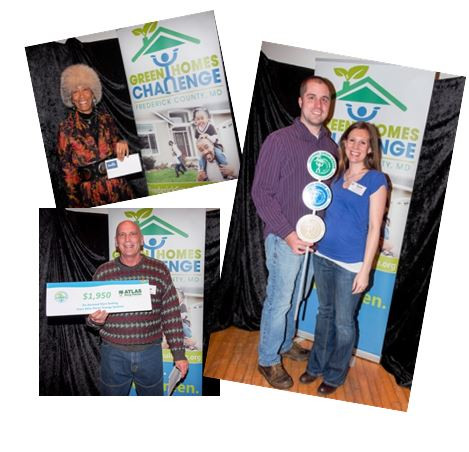
The Green Homes Challenge
makes it fun and easy to save energy,
adopt environmentally-friendly practices,
and use renewable energy.
- Learn about actions you can take
- Set goals and track your progress
- Join a Green Team to stay motivated

Radon is a natural radioactive gas that is known to cause cancer in humans. It arises from radioactive breakdown of uranium in soil, rock, and water, and can become airborne in your home. To test for radon, look for a radon test kit at your local hardware store. For more information, visit the EPA page on radon or watch this video on radon home inspection.
Lead poisoning is a disease contracted from exposure to lead-based products. Children are particularly vulnerable to the health effects of lead, even at low levels of exposure. Effects include aggression, behavioral problems, and deficits in attention span, adaptability, learning, and memory. Lead exposure in adults may contribute to high blood pressure, impaired kidney function, fertility problems, and cataracts. If your home was built before 1978, there is a high likelihood that it contains lead paint. Learn more about lead and steps for lead removal from the National Institute of Environmental Health Sciences and the Green and Healthy Homes Initiative.
Asbestos is a mineral that was used extensively in the mid-1900s for floor tiles, insulation, shingles, and more. Asbestos exposure can cause chronic and often lethal lung diseases including asbestosis, mesothelioma, and lung cancer. Removal of asbestos should be carried out by a professional. Disrupting asbestos products can cause the fibers to become airborne, where they pose a serious health threat. Sealed-in asbestos should often be left alone, while fraying, cracking, or loose asbestos products may need to be removed or sealed. To learn more, visit the EPA page on asbestos or watch this video about asbestos removal.